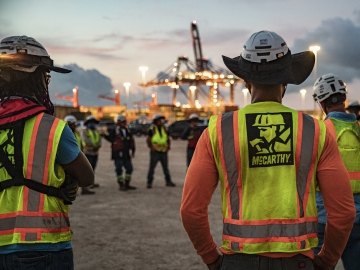
Service After Service: Veterans Building Houston’s Future with McCarthy
McCarthy is spotlighting veterans whose military skills now help build and protect Houston’s critical infrastructure.
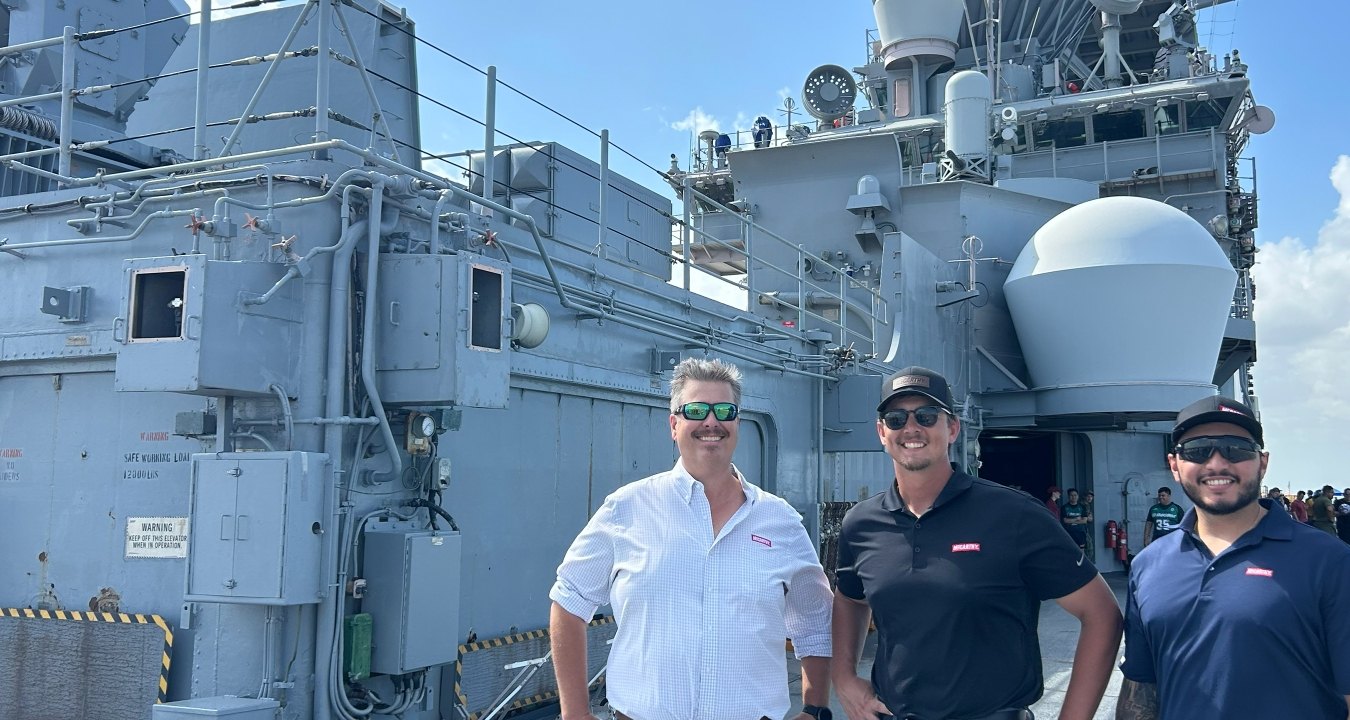
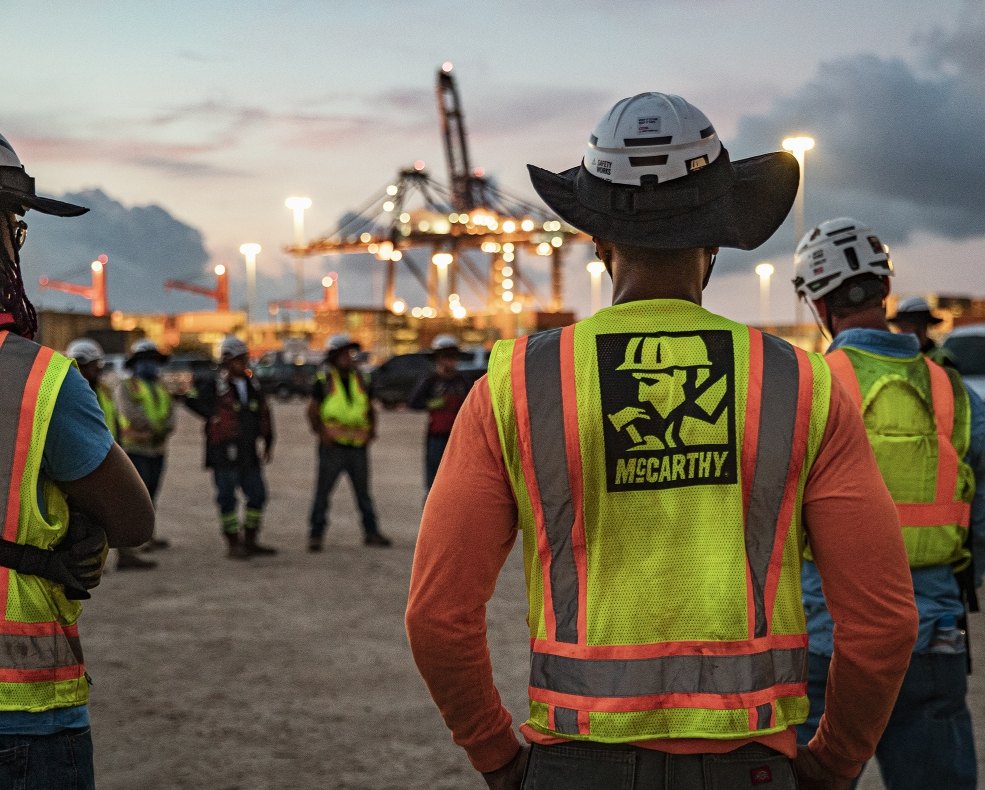
When sailors and Marines arrived in Houston for its first-ever hosted Fleet Week, most people looked up — to the ships, the helicopters and the flyovers. At McCarthy, a lot of our partners look out — to the wharves, docks and water infrastructure they now help build along the same channels those vessels call home.
For veterans like Andy Garcia, Corey Everitte and John Walker, Fleet Week isn’t just a celebration of military service. It’s a reminder that their mission hasn’t ended with military retirement; it has just evolved to helping build and protect the infrastructure that keeps a maritime city moving.
From flight decks to job sites
Andy Garcia, now a project Safety Manager in McCarthy’s marine business unit, joined the U.S. Marine Corps right out of high school. Three weeks after graduation, he was on a plane to boot camp and then into an aviation ordnance role on helicopters, stationed mainly at Camp Pendleton in California.
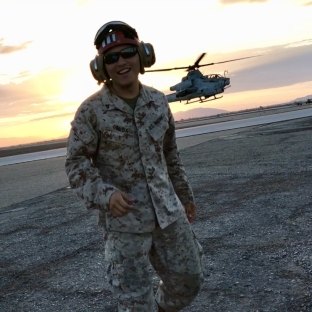
Working with explosives and aircraft meant long, demanding days on the airfield — often 12 to 14 hours at a time — where every bolt, tool and checklist had to be exactly right. FOD (foreign object debris) walkdowns, serial-number tracking and strict qualifications were part of everyday life.
When he transitioned out of the Corps, Andy explored warehouse work and welding school before discovering construction safety. He quickly realized that the same discipline, attention to detail and calm under pressure that kept flight crews safe translated directly to keeping marine construction crews safe on barges and docks. That path eventually led him to McCarthy.
Today, whether he’s reviewing work plans for a marine project or walking a job site, Andy still approaches each day like a critical mission: making sure qualifications are current, crews understand the plan, and everyone goes home safe.
“Big toys” and bigger responsibility
Corey Everitte, an Assistant Project Superintendent in McCarthy’s heavy civil, marine and industrial group, grew up in Fayetteville, North Carolina, in the shadow of Fort Bragg. Surrounded by the Army, he chose a different path — the U.S. Navy.
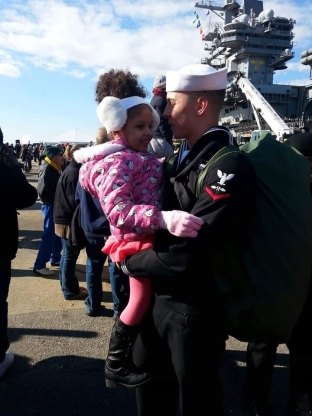
Corey served as an aviation structural mechanic, working first on EA-6B Prowler aircraft and later, specialized systems like ejection seats and onboard oxygen generation. His early adulthood years were spent on aircraft carriers — the USS Abraham Lincoln and USS George H.W. Bush — sailing from San Diego through the Middle East, Bahrain and Dubai, and into ports across Europe.
Promoted to E-5 (second class petty officer) in just a few years, Corey learned to manage high-risk systems where one mistake could cost a life. Meticulous checks, clear communication, and leading by example weren’t optional; they were the job.
When his first enlistment ended, Corey was on the verge of re-enlisting. A conversation with his brother — a McCarthy marine superintendent — convinced him to take a leap of faith and try construction. He joined McCarthy as a pile driver on a Gulf Coast marine project. Over time, he advanced from craft to foreman, general foreman and eventually assistant superintendent.
“We work with big toys,” Corey said. “One mistake can cost somebody their life.” That reality makes the parallels between aviation maintenance and marine construction very real.
A family tradition of service — and building
For John Walker, now a Senior Project Manager supporting the water market in Houston, service and construction were intertwined from the start.
He was already studying construction engineering when he chose to join the U.S. Navy, drawn by both a passion for building and a desire to see the world. Following Officer Candidate School in Pensacola, John was assigned to the USS Vincennes (CG-49) in Yokosuka, Japan, as a Damage Control Assistant — leading the ship’s fire department, damage control team and repair division, including plumbers and welders.
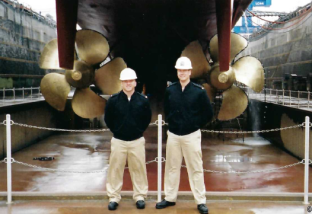
It was an unusually close fit to his construction background: he was effectively commanding the shipboard equivalents of the trades that now build on his projects.
His second sea tour, on a small Coastal Patrol Craft in the Arabian Gulf and Indian Ocean, stretched him even further. With a crew of just 25 sailors and officers, he led the weapons department and, at various times, the ship’s boatswain’s mates, cook and medical corpsman. The Navy seconded the crew to the Coast Guard’s Patrol Forces Southwest Asia, where they worked across the region.
Service runs deep in John’s family — his father served 24 years in the Air Force, and his grandfather served in the Navy in World War II — so wearing the uniform felt like a natural next step.
Between the Navy and McCarthy, John worked at two other companies, but it’s easy for him to admit that McCarthy is the first place that has truly felt like home, culturally.
“The all-in mentality and sense of pride at being part of something bigger than yourself — that’s something I never felt working for privately-owned companies,” he admitted.
Why construction is a natural “next mission”
Across their different branches and career paths, Andy, Corey and John describe remarkably similar reasons why construction — and McCarthy specifically — works for veterans:
- Mission and structure: Projects have clear goals, milestones, and roles. There’s a mission to complete, a team to lead, and a client or community counting on the outcome.
- High-stakes work done safely: Whether it’s loading helicopters with live ordinance, operating barges in fast-moving water or building inside active ports and hospitals, the work is complex and consequential. Veterans are used to that level of responsibility.
- Camaraderie in the up’s and down’s: Long days, tough environments and tight schedules feel familiar. What matters most is doing it together — lifting each other up on the bad days, celebrating wins and looking out for each other.
- Room to grow: Unlike rank structures that can stall advancement, construction at McCarthy offers multiple paths — from craft roles into supervision, safety, project management and beyond.
- Taking care of your crew: In the Navy, leaders had a duty to care for their sailors. At McCarthy, that same expectation is present in how leaders treat project workforce teams — especially around safety and long-term career development.
- Project commands: Running a construction project feels a lot like running a ship in the military, admits John. Each job is part of a larger organization but has its own personality and the authority to make decisions day-to-day. For veterans used to command structures and mission briefs, that structure feels familiar and empowering.
- Showing up for the team: Being on time, prepared and willing to pitch in across business units feels familiar. Veterans tend to “hold themselves to a standard” that benefits the entire crew.
- Doing the small things right: From FOD walkdowns to daily work plan reviews, veterans are used to “checking every little thing” before an aircraft or a major lift moves — a mindset he now applies to cranes, marine equipment and high-risk construction activities.
For many veterans, that combination feels like the best parts of service, without some of the limitations of military life — more voice, more choice and more ownership over their futures.
Fleet Week: Honoring service, highlighting builders
Houston’s first Fleet Week has given McCarthy a visible way to connect these individual stories back to work happening along the Ship Channel and across the city.
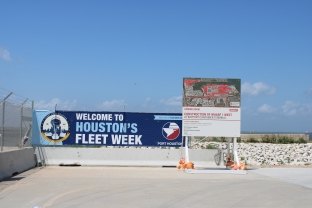
For John, it brings back childhood memories of air shows and base open houses with his dad — now reflected in taking his own kids to parades of ships and live vessel tours, where they can meet today’s sailors and Marines and step aboard working ships, not just museum decks.
For Andy and Corey, walking onto a Navy ship during Fleet Week feels both nostalgic and forward-looking: a reminder of where they started and a chance to show how their skills now help build and protect the infrastructure that serves those same ships.
And for McCarthy as a whole, Fleet Week is a way to celebrate “service after service” — honoring veterans who continue to serve, this time as builders of ports, hospitals, water plants and the critical infrastructure that keeps Houston running.
Their uniforms may be different now. The mission — to keep people safe, support their communities and build something that lasts — remains the same.