Honoring Our Veterans
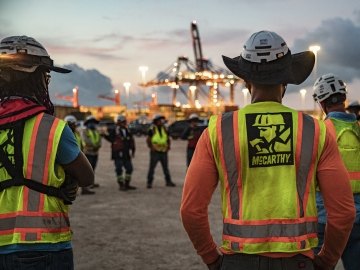
As we approach Veterans Day, we’re honored to recognize some veterans who are part of our McCarthy team. They share what their military service has meant to them and how the experiences, values, and perspectives they carry continue to shape their work today. We’re grateful for their service and proud to celebrate their stories.
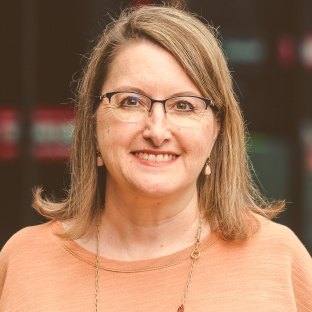
Tina Nelson
Administrative Assistant, U.S. Army Veteran
How has your military experience shaped who you are today, particularly in the way you approach teamwork and leadership?
In the Army, we often said, “There’s no ‘I’ in team.” At McCarthy, one of our values is “We, Not I,” and I believe both express an important truth: teamwork is essential to success. Each person brings unique skills, talents, and knowledge to the group. As a result, everyone shares responsibility for working toward a common goal and bringing the project, or mission, to a successful conclusion.
As a leader, it’s important to know team members as individuals and pay attention to their participation and the overall health of the team and project. That awareness helps you recognize when something or someone needs support or attention.
Who had a meaningful influence on your journey, either during or after your military service, and what did you learn from them?
John Heithaus was my manager when I worked at a nonprofit agency. Our military experiences complemented each other and together we developed strong, effective ways of working. John was always thinking outside the box and pursuing the Big Hairy Audacious Goal, while I was more comfortable with structure and staying within the lines. He taught me that thinking big is just as important as getting every detail right. He also embraced the 80/20 rule, which I still find challenging because I like things neat and complete. But I’ve learned that stepping back from the details and getting out of the weeds is important, too.
What does Veterans Day mean to you?
Veterans Day is a purposeful time to remember those who gave their lives for their fellow service members and their country, those who made profound sacrifices for others and those who survived but returned changed, physically or mentally. I don’t want veterans to be forgotten by history. With each passing generation, we move further from their experiences and I’m grateful we have this day to remember those who gave on behalf of others.
What’s a hobby, hidden talent or unexpected interest you have?
Baking, with a strong love of bread-baking. I’ve baked since I was a teen, but this year I started milling flour at home and trying many grains, including ancient Einkorn. A friend shared a recipe that scientists were able to create from bread found in the ashes at Pompeii – that was a fun (and yummy) loaf of bread.
Jon DeVries
Quality Project Manager, U.S. Navy Veteran
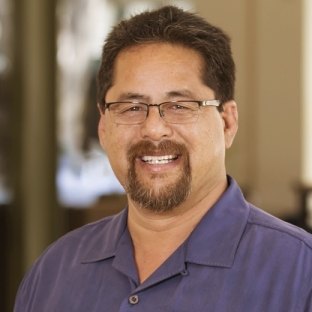
How has your military experience shaped who you are today, particularly in the way you approach teamwork and leadership?
My time in the Navy taught me many things, with trust and commitment being the most important. Trust was about trusting your teammates and about being trustworthy. This was key during difficult or strenuous situations. Commitment was about being “all in” and following through on everything you did or committed to do. When you’re out at sea, you can’t call in service reps to fix things. You had to be able to rely on your team.
Who had a meaningful influence on your journey, either during or after your military service, and what did you learn from them?
There were many people who had an influence on me during my enlistment, both negatively and positively. However, what I learned from all those experiences is that “you only get out of it what you put into it.” I still follow this approach in every aspect of my life to this day.
What is one thing you wish people better understood about veterans in the workplace?
I really can’t speak on behalf of all veterans, but for me, I wish people would understand that we were trained to deal with difficult situations in a manner that is aggressive and direct to resolve them in a swift and decisive manner. This is a huge asset in my opinion, but one that can be easily misinterpreted by others.
What’s a hobby, hidden talent or unexpected interest you have?
I love to sing! Take me to a karaoke show and let’s have some fun!
Thaddies Wingate
Logistics Manager, U.S. Army Veteran
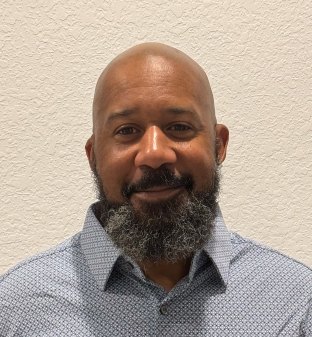
How has your military experience shaped who you are today, particularly in the way you approach teamwork and leadership?
The military taught me that leadership is ultimately about people. It shaped my belief that a leader’s job is to build strong teams, develop others and give them the trust and opportunity to lead - because the success of the team will always matter more than the success of any one individual.
What was one of the biggest adjustments you experienced when transitioning from military service to a civilian career?
Probably my concept of “on time.” In the military, if you were on time, you were late. I used to be ready to go at least 10 minutes early for everything. I’ve apparently adjusted pretty well, because now when someone starts a Teams meeting seven minutes early, I’m wondering, “Who does that?”
Who had a meaningful influence on your journey, either during or after your military service, and what did you learn from them?
Sgt. 1st Class Bernard Evans, my first leader in the Army, had a huge influence on me. He took me from an E1 private to a sergeant who led soldiers in Iraq. He also once told us to “respect higher-ranking soldiers for the rank they’ve earned. You have to. But I want y’all to respect me for the man and leader I am.” That has always stuck with me because we didn’t follow Evans because of the rank on his chest, we followed him because of who he was.
What is one thing you wish people better understood about veterans in the workplace?
I think sometimes people see the military experience on a résumé but don’t fully understand everything that comes with it. You learn pretty quickly how to work with all kinds of people, adapt when the plan changes, take ownership and figure out how to get things done, and those lessons translate pretty well anywhere.
Marissa Guerrero
Assistant Project Manager, U.S. Marine Corps Veteran
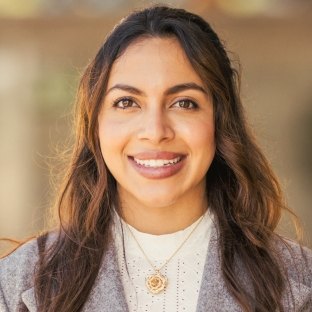
What was one of the biggest adjustments you experienced when transitioning from military service to a civilian career?
It was the shift in mindset. In the military, there is often a clear structure, defined expectations and a shared understanding of how things are supposed to get done. In the civilian workplace, I had to learn how there can be different approaches to accomplishing the same goal, and that collaboration sometimes means navigating different perspectives and working styles. It has taught me to be more adaptable and patient, while maintaining the accountability and strong work ethics I developed in the military.
Who had a meaningful influence on your journey, either during or after your military service, and what did you learn from them?
My best friend, Alexa. She is currently deployed and has been in the U.S. Navy for eight years. I have the utmost respect for her service and dedication. We've had conversations about personal growth, career opportunities and navigating the transition from military to civilian life. Those conversations have given us an opportunity to learn from each other's experiences and think about how we want to continue growing, both personally and professionally. I'm grateful to have someone in my life who understands that part of my journey, and I continue to admire her commitment to serving.
What is one thing you wish people better understood about veterans in the workplace?
People who have prior military experience bring a wide range of skills, experiences and perspectives to the workplace. I think it's important to recognize that everyone's experience is different, and not all challenges or lasting impacts of military service are visible. Veterans may carry experiences that others don't fully understand, and a little empathy, understanding and openness can go a long way. I hope people recognize veterans not only for their service, but also for the individuals they are and the contributions they continue to make.
What’s a hobby, hidden talent or unexpected interest you have?
One habit I took away from my time in service is the discipline of getting up early and staying active. To this day, I wake up at 3:45 a.m. to work out before work. It's become a part of my daily routine, and I love how it sets the tone for the rest of my day. I tend to have a lot of energy and starting my mornings with a workout has a lot to do with it.
David Auslender
Director, Electrical Engineering, U.S. Coast Guard Veteran
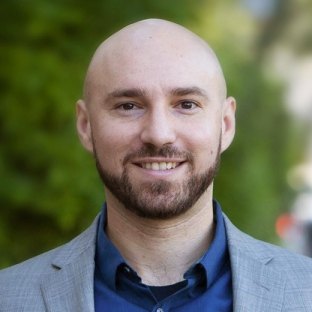
How has your military experience shaped who you are today, particularly in the way you approach teamwork and leadership?
The Coast Guard sent me to Electrician’s Mate School, where I gained the skills to serve as an electrician aboard an icebreaker on the Great Lakes. That experience gave me a foundation in the electrical field that still serves me today. I also saw how leaders relied on each person’s unique skills to accomplish a mission. In my career now, I try to set people up for success by aligning our team’s goals with each person’s strengths.
What was one of the biggest adjustments you experienced when transitioning from military service to a civilian career?
In the military, direction and tasking were more direct, with less room to interpret how to complete a job. In my civilian career, I have more latitude to explore different approaches to problem-solving.
Who had a meaningful influence on your journey, either during or after your military service, and what did you learn from them?
Lieutenant Commander Kenneth Pepper, the commanding officer of the U.S. Coast Guard vessel Morro Bay, had a lasting impact on me. He knew I had studied astronomy and physics and when we were on the bridge together late at night, he would ask me about those subjects with genuine curiosity. It meant a lot to have a commanding officer take the time to learn from a junior enlisted sailor. He taught me that no matter your rank, there is always something to learn from the people around you.
What’s a hobby, hidden talent or unexpected interest you have?
I’ve played chess for as long as I can remember. My dad taught me when I was 5, and it became something we’ve always enjoyed playing together. Some of my best memories are of playing chess with my dad and brother. Today, I still enjoy playing online and with friends.
Emilio Acid
Payroll Coordinator, U.S. Air Force Veteran
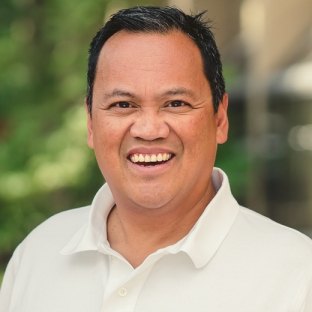
How has your military experience shaped who you are today, particularly in the way you approach teamwork and leadership?
The military has taught me to be on time, respect your authority and work as a team in any situation. We will always have your six!
Who had a meaningful influence on your journey, either during or after your military service, and what did you learn from them?
My first supervisor, Master Sergent Ronald Matthews, had a big influence on me at the start of my military career. He taught me the importance of treating others with respect and approaching situations with patience.
What is one thing you wish people better understood about veterans in the workplace?
I want people to recognize that veterans have dedicated a part of their lives to protecting and serving our country. There is a special bond among veterans based on their experiences, sacrifices, and commitment to service.
What does Veterans Day mean to you?
Veterans Day is a time to honor the heroes from the past, present and future. It is a day to reflect on the sacrifices veterans have made to protect the freedoms we enjoy as Americans.
What’s a hobby, hidden talent or unexpected interest you have?
I was a mall rat growing up in the 80s! These days, I spend my weekends heading to estate sales in my area. I love getting to walk through homes in upscale neighborhoods that I’d otherwise never have the chance to visit. It’s neat to see what people have collected over the years. My best find was a Herman Miller table and four DCM chairs for only $700! You never know what treasures you’ll find. Who knows? You might see me on Antiques Roadshow someday!