Expanding Hospital Parking Structures for Better Care
A California hospital parking expansion added 1,100 stalls while remaining operational, incorporating patient-focused wayfinding and sustainable construction methods.
This article was originally published by Parking Today.
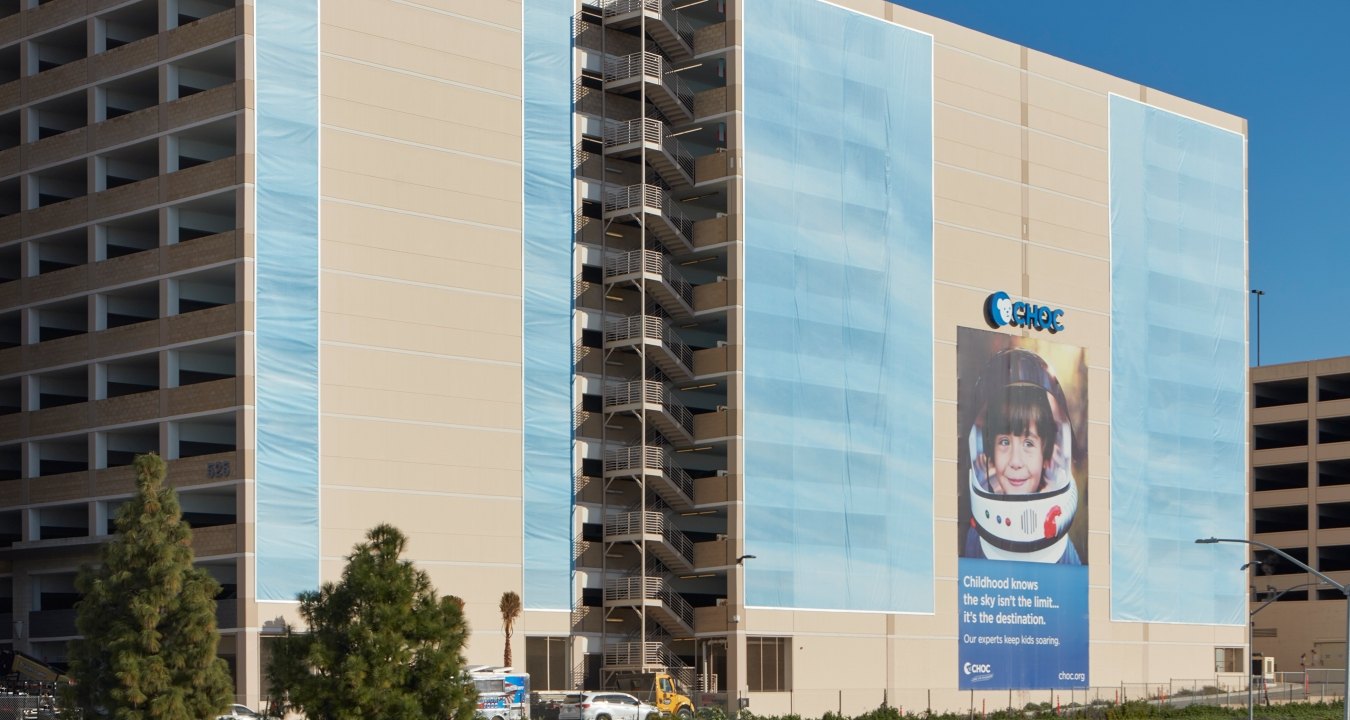
Driving your child to the hospital is already a harrowing experience. Finding parking once you arrive should not be your biggest concern. When parking structures prioritize flexibility, enhance connectivity, and respond to evolving patient and staff needs, they make hospital visits a little less daunting.
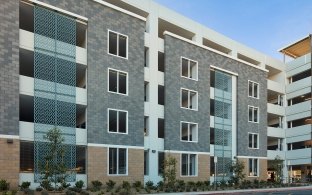
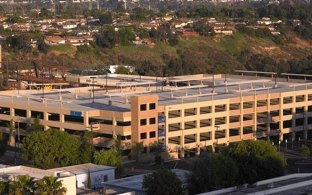
In early 2025, as McCarthy Building Companies completed the Southwest Tower at Children’s Hospital of Orange County (CHOC), in Orange, California, the construction firm also expanded the facility’s parking structure. This project involved expanding the structure from 522,000 to 912,000 square feet by adding three vertical levels as well as another horizontal bay to connect the new outpatient tower and the existing main campus. However, the expansion was about more than connecting buildings. It increased the efficiency and sustainability of the overall structure by accommodating a growing number of patients and staff within this care-centric environment.
Undergoing expansion during operation
Constructing a parking structure for a hospital is already an exacting task, as medical staff, patients, and their families need seamless access points from the garage to the buildings. Expanding the structure while it remains operational makes the situation even more complex.
Before expansion, the CHOC parking structure contained 1,659 stalls within a nine-story structure. These spaces were divided across three bays holding spots for patients, families, medical staff, and guests. To accommodate more visitors, McCarthy expanded the parking structure to a height of 12 stories and a width
of four bays, with 2,767 stalls and 67 future electric vehicle (EV) spaces.
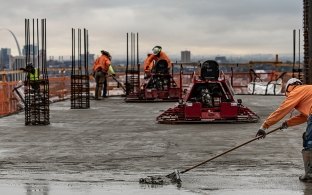
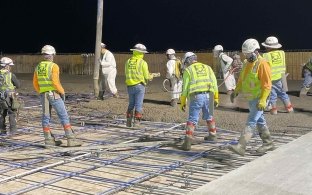
Not only did McCarthy have to expand the parking structure by almost half its size, the project team also had to ensure that traffic continued to move efficiently for current users. This required consistent communication with CHOC staff and around-the-clock care from project team members who safely directed patients and medical professionals in and out of the structure during construction.
Fostering care through connection
The CHOC parking structure expansion was designed to ensure that patients, families, and medical staff had easy connectivity to each of the buildings. To accomplish this, McCarthy implemented a new pedestrian sky bridge to connect to the Southwest Tower. The parking structure now has two sky bridges, one connecting to each hospital building. Additionally, the onsite team identified walking paths to connect all five elevator banks to the bridges without affecting the flow of traffic. A crosswalk on the first floor also provides easy access to the new outpatient services building.
New wayfinding systems were also created to provide visitors with a sense of ease. Since the first three levels are solely dedicated to patient parking, the enhancements include a parking-guidance system, which helps families easily locate their vehicles in a garage with more than 2,000 spaces. It also guides them in choosing the best level to park based on real-time availability.
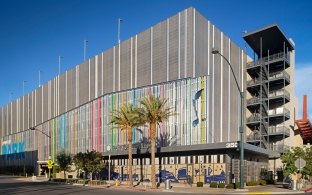
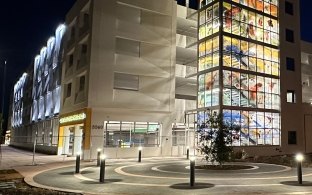
In addition to accommodating drivers, the structure was also designed to help children feel at ease before entering the hospital. Colorful, yet modest graphics that can be found throughout the Southwest Tower were incorporated into the parking structure, extending a sense of care outside of the facility.
Optimizing and repurposing resources
A significant challenge the project team encountered during the expansion involved maximizing vehicle stalls while accommodating site constraints. Given the limited availability of land, space was constrained on all sides of the project. One side of the parking structure was only a few feet away from a neighboring building, while two other sides faced active hospital access roads, leaving minimal space for project cranes and pumps to construct the garage.
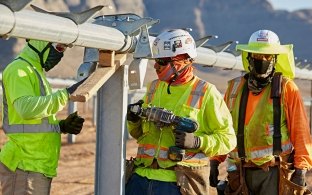
Through around-the-clock work and prioritizing safety for construction workers and those passing through the hospital, McCarthy was able to deliver the expanded parking structure within a year. The project team also upgraded the current infrastructure by adding fiber reinforcement to shear walls, increasing foundations, and widening existing columns.
Additionally, while constructing the parking structure, McCarthy prioritized repurposing existing materials. The entirety of the concrete formwork was reused to minimize the amount of plywood needed. This reduced the number of pours because fewer panels had to be formed; it also lowered costs by using less plywood and minimized landfill impact by discarding fewer plywood sheets. Recycling concrete formwork is an innovative approach to all parking structures. Doing so can contribute to sustainable goals and better building practices overall, as fewer materials are wasted and construction costs are minimized.
Considerations for future hospital parking structures
As the design and construction of medical buildings continue to become more innovative, so should the parking structures that support them. As McCarthy partnered with the overall team on the Southwest Tower and the expansion of the CHOC parking garage, each phase entailed notable considerations.
Flexibility and capacity planning are significant factors, especially in high-density areas like the location of the CHOC. Construction firms will need to learn how to maximize efficiency while being considerate of neighboring infrastructure, which is typically located only a few feet away.
Patient-centric environments, even outside the physical walls of the hospital, can significantly support the mental well-being of a child. Studies have proven that colorful and natural imagery can enhance relaxation, provide a welcome distraction, and reduce sensory overload with less intense scenery, among other benefits. Incorporating the smallest details in wayfinding signage or wall decorations can alleviate a child’s fears or distress.
Sustainable building practices should be incorporated into the development of a hospital as well as a parking structure. This helps projects achieve certification faster and provides long-term benefits as materials are conserved during the development of all structures. This can also lead to fewer repair costs and lower utility bills as more power systems transition to all-electric.
Parking marks the start and the end of the hospital journey. Let’s make it a seamless experience.
Cameron Kilar is a director at McCarthy Building Companies. He can be reached at CKilar [at] mccarthy.com (CKilar[at]mccarthy[dot]com).