Redefining School Construction: Integration That Reaches Beyond the Project Fence
With many K-12 school districts opting for facility updates, construction within an active learning environment presents unique opportunities for project teams on campus.
Arizona’s K-12 public schools are navigating several shifting indicators contributing to declining enrollment numbers. Slower population growth, rising living costs, and the increased use of Empowerment Scholarship Accounts (ESAs) are prompting more families to pursue private, homeschool, and other alternative learning models. These trends are challenging local district leaders to consolidate student populations, and in some cases, close school campuses.
As a result, leaders are placing a greater emphasis on revitalizing, modernizing, and repurposing existing facilities to support ongoing student and teacher needs. Whether adding capacity to support consolidation or creating unique program opportunities, these investments offer a chance to rethink how school infrastructure can support curriculum needs today and for years to come.
An expanded focus in STEM, the arts, athletics, and Career Technical Education (CTE) programs requires specialized spaces designed to support the equipment, class size, and instructional needs. Schools are also prioritizing collaboration and flexible learning through indoor-outdoor learning spaces, modular furniture, and adaptable wall systems.
While these projects may create temporary disruptions, a community’s educational needs remain consistent, and must be held as the central priority during a school construction project. As our project teams have navigated significant campus upgrades and redevelopments, the following lessons learned have shaped our ability to support districts in their efforts to maximize bond dollars while maintaining quality learning environments, even as campus spaces are being reimagined during construction.
Listening: The Heartbeat for Campus Projects
Before any shovel enters the ground or designs are finalized, it is essential that design professionals, consultants, and contractors dedicate time to listen to the needs of the people that call the campus home. Through hosting teacher focus groups, design charrettes, and community listening sessions with students, parents, and even neighboring residents within a community, the project team can identify the core elements within a project that each stakeholder group cares about most. Whether it's the ability to maintain timely parent drop-off and pick up processes or preserving an element of campus tradition across the new facility’s design, the needs of the community should serve as the north star for how a project is designed, built, and operated.
On a current campus redevelopment at Madison Rose Lane Elementary School in Phoenix, the team uncovered a community desire to maintain the school’s identity in the arts through preserving specific architectural elements of one of the district’s oldest campuses. With Phase 1 of the project nearing completion, the newly reimagined Rose Lane Elementary will deepen its identity in the arts through added studio spaces, outdoor performance areas, and flexible learning spaces that students and teachers can adapt to the day’s lessons.
Involving the campus’s end-users also brings invaluable insights into the daily operations of a school and opportunities for enhancement through construction. McCarthy recently began construction on a campus redevelopment for Creighton School District’s Biltmore Preparatory Academy in the heart of Phoenix, thoroughly engaging Biltmore Prep’s parents and teachers in early planning.
Tucked within a residential and business community, Biltmore Prep’s families previously experienced challenges with the drop-off and pick-up process — an issue quickly identified as an opportunity for redesign. Heavily informed by parent and staff feedback, the finished project will significantly enhance the queuing lane to ease traffic congestion along the main roadways surrounding the campus.
“Rebuilding a school while it remains fully operational requires a true partnership between the school and construction team,” said Biltmore Prep Principal Dr. Stephanie De Mar. “A student-first approach has helped us navigate the challenges of an active construction site while keeping safety, learning, and our school culture at the forefront throughout the building process.”
Culture as Core to the Project
While design often translates community priorities into physical elements throughout the finished product, project teams should avoid the pitfall of limiting culture to architecture alone. Project teams have an incredible opportunity while guests on campus to infuse a school’s traditions, events, and identity throughout the project.
Students at Creighton’s Biltmore Prep learn through a unique biliteracy model that shifts instruction from English to Spanish throughout the week. To strengthen this learning model, the finished campus will feature classrooms designed with multi-sensory elements such as color and texture that signal the language of learning within.
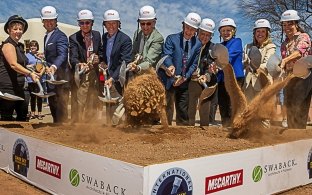
As construction occurs throughout the campus, members of the project team have embraced a new identity as one of the Biltmore Prep Tigers, using both languages in all project communications, signage, and even conversation. Students even participated in traditional Hispanic music and dance performances throughout the groundbreaking event and created a time capsule to be incorporated into the new facility.
"School projects like these are truly unlike any other work we take on because, for the year or two we’re on campus, we get to become part of a vibrant school community,” said Chad Smith, who oversees the Biltmore Prep project. “There’s a real sense of nostalgia in building places where students will learn and grow, and we’re proud to deliver schools we could only have dreamed of as kids ourselves.”
Equally important to creating an impactful facility is the experience of students on campus eagerly awaiting their new school or learning environment. In addition to participating in pep rallies, parent-teacher nights, and Back to School events, project teams are lending their expertise to generate excitement around the construction happening on campus.
Through age-appropriate interactive activities, students can feel directly involved in the construction of their new facilities. Interaction comes in many forms such as coloring sheets that provide young students with opportunities to draw and envision their new school, to McCarthy-hosted Construction Clubs providing late elementary and middle schoolers with lessons in mechanical, plumbing, electrical, and basic modeling activities. McCarthy also remains an active participant in the ACE Mentor program at various high schools across Arizona, mentoring students as they apply their STEM learning to larger projects.
The team modernizing Phoenix Union’s Metro Tech High School did just that. As one of the Arizona’s largest CTE-focused schools, Metro Tech has fostered modern career training and public-serving vocational instruction since adopting this model in 1985. McCarthy is currently performing significant enhancements throughout the campus to better adapt spaces for the programs within, the customers they serve, and modern technologies needed to provide students with real-world applications.
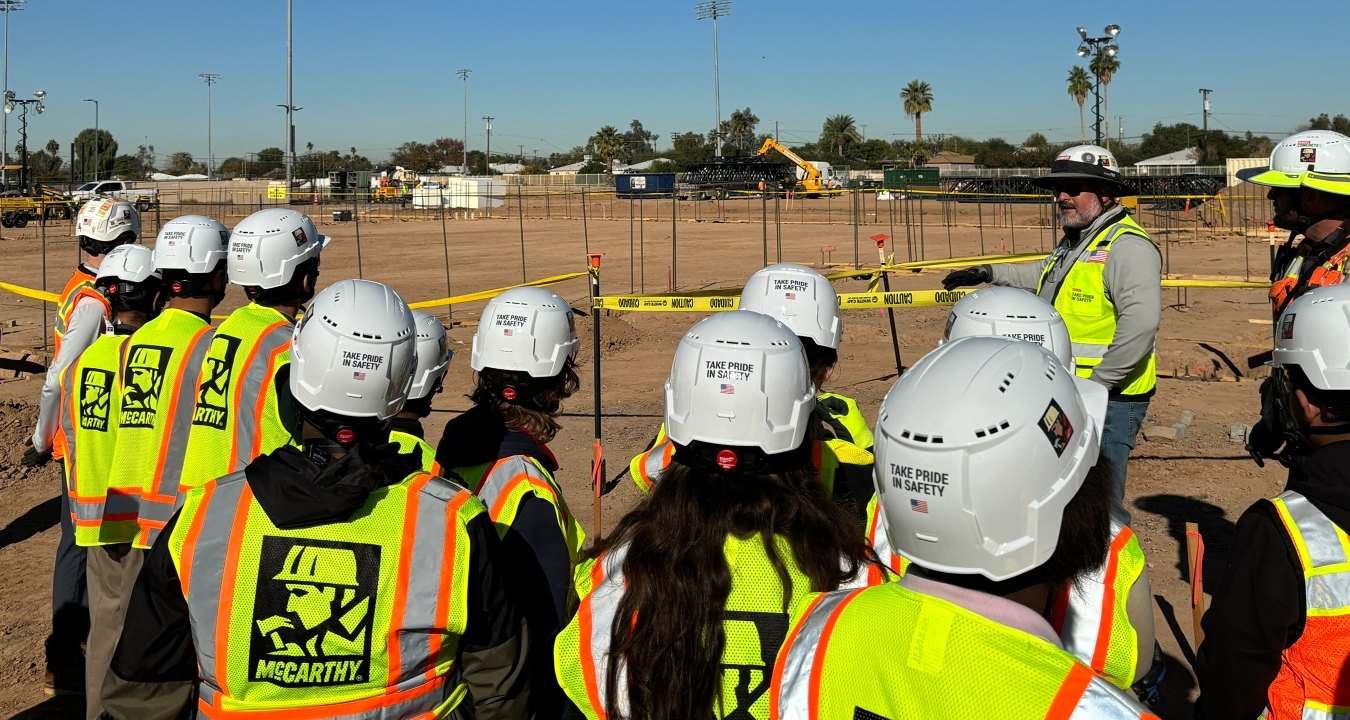
McCarthy has partnered with Metro Tech’s ACE Mentor program for nearly a decade, providing industry lessons and mentorship for students within the school’s construction and electrical programs. Now, these students have the opportunity to apply classroom-based principles and skills discovered through ACE in support of the project happening right on their home campus. Metro Tech has also welcomed students from other Construction Clubs across the Valley to tour an active campus construction project as a local example for many students who would otherwise not get to experience a live construction project.
"When I started as an ACE Mentor back in 2018, I never imagined we’d get to experience the full-circle moment of mentoring students while a construction project is happening right outside,” said preconstruction director Art Aguilar. “It’s one thing to learn about construction within a classroom but seeing those lessons unfold in real time is what truly inspires students to pursue it as a career.”
Protecting Students and the Learning Within
The core difference between building an entirely new school and conducting a seamless renovation or rebuild is significant — having students and staff on campus during a critical project increases the risk of safety incidents, inconvenient conditions, and operational changes for both the contractor and student population if not properly executed. At the heart of construction on an active campus is the need to protect and preserve as much of the daily learning conditions as possible, as construction can already signal change and uncertainty.
Of utmost importance is establishing safe conditions for students to continue gathering in common spaces, playing outside, and walking throughout the campus. Clear separation between the project and active learning spaces even creates opportunities for student engagement, through creative murals and artistic expression opportunities along the project fenceline.
Beyond physical barriers, how teams communicate activities and changing conditions to school leadership directly affects key school operations such as pickup and drop-off and school events. McCarthy recently completed a rebuild of Chandler Unified School District’s Galveston Elementary School, in the heart of a residential community. To ensure all neighboring homes were informed of the project and key activities, the team hand-delivered letters to each of the homes prior to construction and prior to major activities on site. The team also hired street sweepers to clear debris from the surrounding roads in addition to team trash pickup efforts, maintaining a partnership with the community that extended beyond the school fence.
With active campus projects on the rise, contractors must recognize the significance of the trust given to build while students, teachers, and families focus on the learning at hand. These projects represent a unique opportunity to magnify the culture on campus through infrastructure upgrades that signal an exciting new chapter in the longstanding history of these schools. Through fostering creativity and connecting the activity on site to the learning happening within the classroom, school construction projects can be mutually beneficial when teams take extra care in reaching beyond logistics, scheduling, and execution.
About the Authors:
Natalie Carroll is a Business Development Manager for McCarthy’s Education Business Unit in the Southwest Region. With a strong dedication to advancing educational opportunities, Natalie plays a key role in fostering and sustaining partnerships with K-12 school districts, career and technical education (CTE) school districts, and community colleges across Arizona.
Katie Smith is a Business Development Director for McCarthy’s Education Business Unit in the Southwest region. With over a decade in higher education, focused on research and emerging technology, Katie aims to foster industry connections throughout Arizona Education, expanding partnerships beyond K-12 districts and higher education institutes.
Our Expertise Spans Education Nationwide
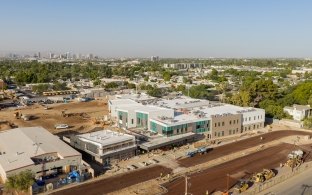
Madison Rose Lane Elementary Rebuild | Phoenix, AZ
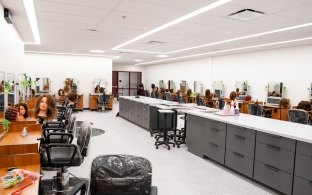
Metro Tech High School Renovation | Phoenix, AZ
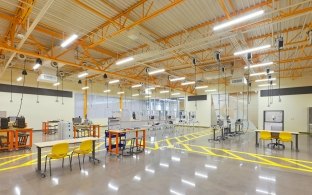
West-Mec Northeast Campus Additions | Phoenix, AZ
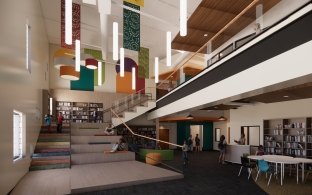
Creighton Biltmore Preparatory Academy Renovation | Phoenix, AZ