Taking Pride in Safety: A conversation with Billy Naylor
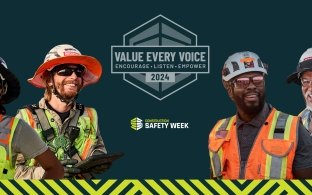
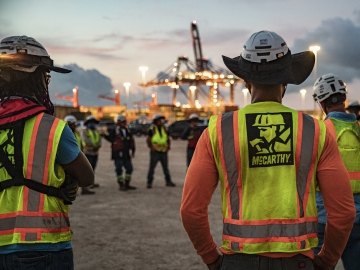
As we kick off 2026 Construction Safety Week, Senior Vice President of National Safety Billy Naylor shares what drives him, what's changing — and how every person across our company and the industry should value safety this week and every day.
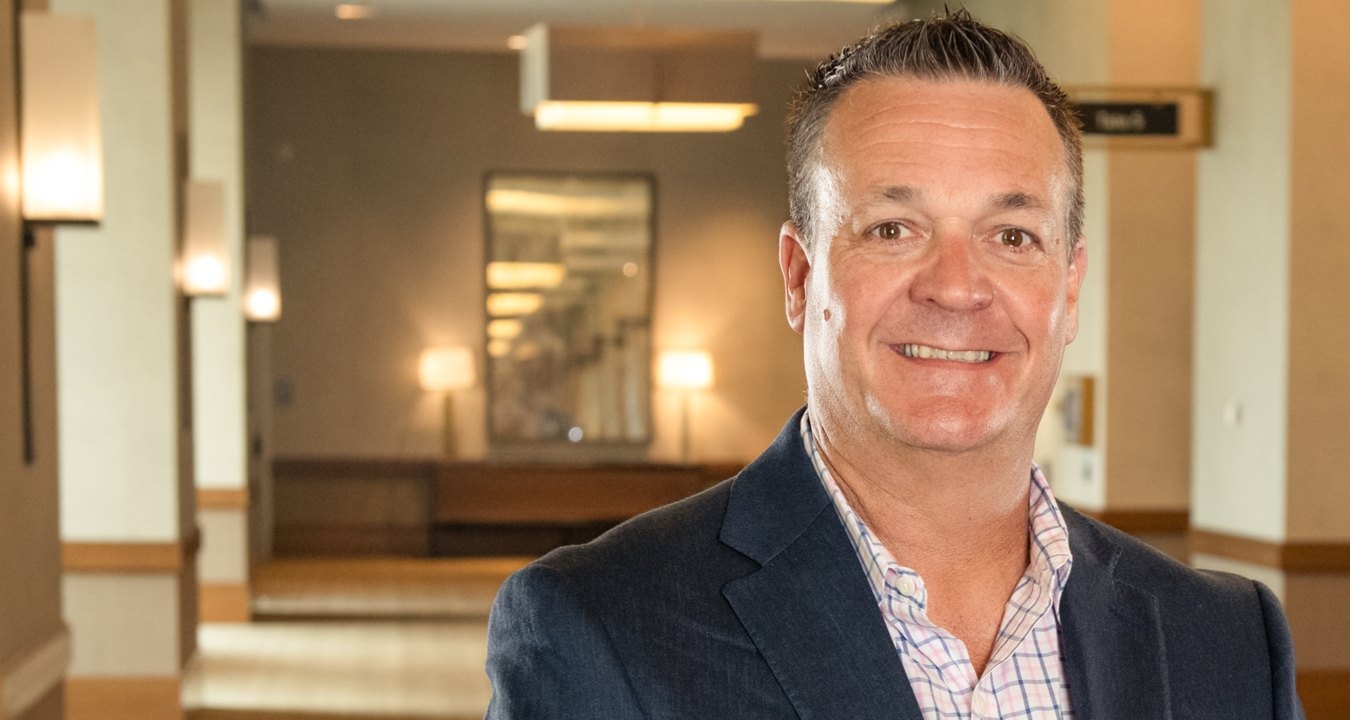
Having the privilege of leading national safety for McCarthy Building Companies, Inc. is one of the greatest honors of my life. It’s something I'm extraordinarily proud of and something I never thought I'd accomplish. I want every employee to know there is not a day I take it for granted, not a day I don't take it seriously and not a day I'm not pulling hard for everyone to return home safely.
Q: Serious Injury and Fatality (SIF) prevention is one of McCarthy's highest safety priorities for 2026. What makes SIF events different from other incidents, and what specific steps is McCarthy’s national safety team taking this year to get in front of them before they happen?
A: SIF requires a mindset shift. That’s the most important thing to understand about it.
For years, the construction industry was wired to think about safety through the lens of recordability. Our recordable rate is something we're mandated to submit on every proposal, every owner deliverable. And companies — including ours — have gotten very good at driving that number down. When I joined McCarthy in 2006, our rates were much higher. Reducing recordable incidents became the driver of our behaviors and the primary way we measured ourselves.
But here's what didn't change in our industry: serious injuries and fatalities. Across the industry, that rate looks virtually the same as it did many years ago. This is the crucial problem the industry is working together to address.
To support this effort, McCarthy is shifting how we look at risks. We're asking: What if? When an incident occurs — whether it's a recordable injury, property damage or a situation where nobody got hurt — we're going to look at it harder than we ever have. A near miss with zero injuries gets the same level of review as an event where someone was hurt. We want to learn from every incident, so we never repeat it. We're going to use the knowledge gained from today and apply it to tomorrow.
This is a behavior change in how we react to events — and we're ready for it. Our clients in a few different markets are already talking SIF with us. It's going to become a shared language across construction, just like recordability. We know that, done correctly, we're going to do a much better job of learning from incidents so we don't repeat them.
Q: Stop Work Authority is something we continue to emphasize across every project and office. In your view, what's the biggest barrier to someone actually stopping work, and what do we do as an company to make sure that person is celebrated rather than penalized?
A: The biggest barrier is simple: we don't always know where someone came from before they arrived here.
Not every company puts safety at the forefront the way McCarthy does. Someone may have spent years in an environment where stopping work had consequences. Then they come to us and we're telling them something they may have never heard: we want you to stop work. And we mean it.
We're smart enough to know the impact. The second you have a serious incident, you don't just lose that moment of production, you lose it three times over. Work stops. There's an investigation. There's an emotional toll that doesn't show up on any spreadsheet. The case for stopping work isn't just moral. It’s practical.
But we can't just say it. We have to prove it every time. We have to celebrate the person who hit that stop button — thank them in front of their crew, recognize them in huddles and toolbox talks. We have to make heroes of people who stop unsafe work. If we don't consistently drive that message, it fades. And when it fades, someone who's unsure stays quiet — and that's when we lose.
Done right, we become the employer of choice. Once craft workers realize they have the right to stop work and that this company will support them, that's somewhere they want to be.
Q: One of the most meaningful shifts in recent years has been the idea that safety isn't exclusive to the jobsite and is just as important to those in offices. How has that mindset translated across our offices and the broader company?
A: That's something we've genuinely gotten very good at. The truth is, just because the hazards in an office look different doesn't mean you can't get hurt there.
When an owner or trade partner walks into one of our offices, the first thing they experience is our safety culture. A employee-partner at the front desk hands them a Take Pride in Safety card and walks them through our emergency management plan. That moment — with an office employee, not a superintendent — tells every visitor exactly who we are.
Starting every meeting with a Safety Moment has been another big differentiator. That's a culture thing, not a mandate. We take five minutes to deliver a safety moment or ask someone to share one from their own life. It keeps safety top of mind for everyone, including those who never set foot on a project. We still see a handful of injuries in our offices each year, and our goal is zero everywhere.
Q: Our goal – as always – it to send everyone home the way they came to work. As you think about Construction Safety Week 2026 and the year ahead, what's the one thing you most want every employee — from the craft professional on a jobsite to the person answering phones in an office — to take away from this week?
A: Most importantly, I want everyone to take away how proud they should be of McCarthy’s safety program — and how seriously we take it. This is not just something we say. It's who we are.
Every employee-partner, every craft professional, every trade partner on a McCarthy project should take a moment to thank the person next to them — and thank themselves — because it takes everybody buying in. But I also want everyone to understand: what we did yesterday is done. Tomorrow is a new challenge. We have to get up each day with the same level of concentration and fight and take it on just as well as we did before, if not better.
Ask yourself how you can grow in your safety journey and how you can become an even greater steward of Take Pride in Safety. It's the one aspect of our business that touches every single one of us.
Q: Is there anything else you'd like to highlight during our focus and celebration of Construction Safety Week?
A: I'd like to highlight our 2025 safety record; especially our 0.33 Total Project Incident Rate (TPIR) compared to an industry average of 2.2. But that number is much larger than a statistic. It's the men and women, partners and families who work for this company, working hard and doing their very best to send everyone home safely. We logged a record total of more than 33.6 million total labor hours in 2025 while reducing recordable injuries. That is the safest year in our company's history.
We want to provide the best and safest place to work. We want to send everyone home safely every night. This is the one thing every one of us has control over. You can control whether something happens to you — and that level of thinking is exactly what has gotten us to this impressive low number.
It’s up to all of us to keep things trending in that direction.