Debunking Self-Perform Services Myths
Seven truths about the advantages of working with a general contractor with self-perform capabilities.

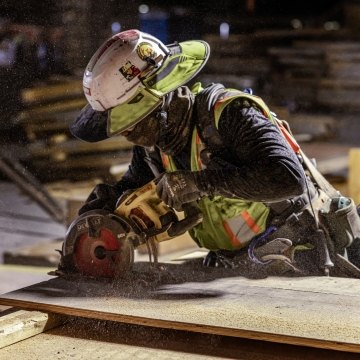
Self-perform construction services offered by general contractors are often undervalued due to common misconceptions. Unlike a traditional construction services broker, a self-performing general contractor is a builder that uses its own labor force to perform a portion of a construction project. To address misconceptions and promote better understanding, we’ve highlighted some of the most common hesitations owners may have when it comes to leveraging this expertise to achieve their project goals:
Myth #1: Self-perform services come at a higher cost, impacting overall competitiveness.
Reality: In contrast, self-perform construction services can offer significant value to the total project cost. In fact, self-perform scopes are often competitively bid to ensure competitiveness and accuracy. In other instances, third-party cost estimators are engaged to validate pricing and ensure fair and transparent cost estimates. These processes enhance bid reliability and reinforce the general contractor’s commitment to delivering value.
Myth #2: General contractors lack understanding of the supply and labor market when self-performing.
Reality: General contractors are deeply embedded in the construction market by nature and have a comprehensive understanding of industry trends, pricing and best practices. Combining in-house market and trade partner knowledge gives us a wider view of market conditions, which informs decisions to optimize project outcomes. As an added advantage, general contractors that self-perform have access to a broader labor pool, eliminating the need to share talent between projects with competing priorities.
Myth #3: Self-perform services should be limited to small or simple projects.
Reality: Large and complex projects also benefit from self-perform services. General contractors have the capacity and expertise to handle significant portions of work, such as civil, concrete, interior buildout and various systems. Rather than focusing on increasing their workloads, general contractors look for opportunities where their direct expertise adds the most value to clients and projects.
Myth #4: General contractors lack the resources to handle specialized work.
Reality: Established general contractors have significant resources at their disposal, including skilled workers, advanced construction equipment and robust supply chain networks. These resources enable them to efficiently manage and execute specialized work, often with greater control and flexibility. In addition, their understanding of the construction market, including procurement and materials, enables them and their clients to make informed decisions that benefit the project.
Myth #5: General contractors only self-perform to fill gaps in trade partner availability.
Reality: While addressing labor shortages is a benefit, the primary reason for self-performing services is to enhance project outcomes. In fact, general contractors offer a unique perspective given their involvement over the entire project life cycle. Instead of planning a single scope of work, they understand how each scope ties into the entire work sequence. This creates more opportunities to propose innovative solutions that help achieve project goals, including certainty in safety, quality, budget and schedule.
Myth #6: Self-perform services compromise quality.
Reality: In addition to working with trade partners as needed, in-house workers have extensive experience and expertise in various trades including concrete work, carpentry and site utilities. By leveraging in-house expertise, general contractors can deliver high standards of quality and craftsmanship. They also make substantial investments in training programs and in staying up to date on the latest building techniques and innovative field solutions. By prioritizing continuous learning, this ensures workforces are equipped with the skills and knowledge needed to deliver high-quality projects safely and efficiently.
Myth #7: Self-performing reduces accountability.
Reality: On the contrary, having direct oversight and control over the work being done enhances accountability since the general contractor is responsible for both the management and execution of the work. General contractors need to partner with clients early in the life cycle to align and set expectations. This approach leverages in-house expertise to deliver projects on time and within budget, providing clients with cost certainty and value for their investment.
Self-perform construction services offer numerous advantages, including cost savings, quality assurance and schedule control. By opting for a value-add approach rather than separate services, clients can benefit from cost efficiencies and streamlined project management. While self-performing specific tasks, it is highly beneficial for general contractors to maintain strong relationships with trade partners and strategically decide which tasks to self-perform. This collaborative approach ensures the project benefits from the best combination of in-house expertise and specialized trade partner skills.
About the Author
Paul Erb joined McCarthy Building Companies, Inc. in 2004 and currently serves as Chief Operating Officer for the Southern Pacific Region, overseeing design and construction operations across Southern California and Nevada. With more than two decades of industry experience, Paul has played a key role in establishing McCarthy as the builder of choice across multiple markets. He is known for leading high-performing teams, driving operational excellence and fostering a culture of innovation that delivers lasting value for clients and partners. Paul holds a bachelor’s degree in civil engineering from Manhattan College and is a LEED AP BD+C.