Future-proof buildings: Design Integration maximizes lifecycle value
How early, continuous alignment provides owners with certainty and protects a facility's long-term performance, making buildings adaptable and valuable for decades.
New construction and major facility modernizations represent significant capital investments, often the largest investment a municipality or organization makes outside its core business. For facility owners, executives, and community stakeholders, the question isn’t simply “Can we build it?” It’s: Will this facility perform as intended, stay on budget, open on time, and remain adaptable for years to come?
Owners see the strongest long-term returns when their facility’s goals, design priorities, budget and the construction approach are aligned from day one, as opposed to being addressed after drawings are complete and the surprises begin.
Alignment involves early engagement of those who own, design, build, operate, and maintain the building, and sustaining that collaboration throughout planning and construction. This forward-looking way of building is referred to as Design Integration. McCarthy Building Companies incorporates the Design Integration strategy into every project. It replaces the traditional approach toward building, which is fragmented, siloed and burdened with issues, with a continuously collaborative strategy that supports real-time discussion, evaluation, and well-informed decision making. The payoff for owners is straightforward: cost certainty, fewer surprises, and facilities that deliver long-term value, including an extended building lifecycle.
“When a Design Integration team is involved from day one, owners have clarity on cost, design and construction schedule integration, and assurance that the design meets the needs of the program,” said Russ Sanders, McCarthy’s Vice President of Design Integration.
Why traditional delivery creates avoidable risk
Many construction projects still follow a traditional sequential path: design is completed, drawings go out to bid, and a builder is selected, often based primarily on lowest price. That structure is known to unintentionally create misalignment between vision and budget, leaving owners exposed to change orders, schedule impacts, and compromises.
This creates a high level of uncertainty on many fronts, and the owner has limited ability to forecast true final cost or the project’s actual schedule.
For business leaders, that unpredictability isn’t just a construction issue. It’s a business issue: delays affect revenue generation, service delivery, hiring timelines, occupancy and community commitments.
What Design Integration looks like in practice
Design Integration is built on a simple principle: bring the owner, design team, and builder together at a project’s conception and leverage each one’s industry-wide expertise when the project’s most important decisions are being made. Keep them collaborating during planning and into construction, allowing for better informed decision-making by the owner, adding long-term value to the project.
What a successful Design Integration process entails:
- Clear goals and success metrics (operational, financial, schedule, and performance)
- Transparent governance that enables candid discussions, informed decisions and agreed-upon tradeoffs that achieve the end goal together
- Continuous cost and schedule feedback as design progresses
- Shared accountability across disciplines—not isolated scope ownership
Design Integration allows multidisciplinary teams of experts to review decisions in real time, evaluating design, constructability, cost, materials, technology, and sequencing. This approach helps prevent field issues before they happen and supports owner decisions that protect long-term facility outcomes.
McCarthy’s Design Integration team is comprised of expert builders and architects who facilitate “hyper-collaboration” with the project’s design team, owner, trade partners and user groups. The result is decision-making that supports the goals of the project, its timeline and budget.
The business case: Managing risk with better decisions earlier, fewer disruptions later
For owners and leadership teams, the value of Design Integration is less about the “process” and more about risk reduction and capital stewardship.
Key outcomes owners typically gain include:
1) Cost certainty without sacrificing the operational vision
Instead of waiting for a late-stage price check, integrated teams evaluate options as choices are made, which protects the elements that matter most to operations and patient/customer experience.
“If a General Contractor is just going to be a pricing system that says, we can or we can't afford this, then there's all sorts of things that get cut out of the job,” says Julie Garcia, McCarthy’s Vice President of Preconstruction, “but that is truly doing a disservice to the team. You've got to give people the opportunity to speak about what's important to them and understand how that folds into the overall vision and collectively make decisions about what is and isn't going to be part of the finished product.”
2) Fewer change orders and less schedule volatility
Owners benefit when teams identify clashes and constructability issues in a digital environment—before they become field rework.
The integrated team moves faster because they are reviewing and verifying digital plan layouts and 3D models to catch mistakes before they become expensive on-site problems.
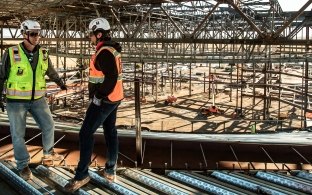
“The old way was design happened and then construction happened,” Sanders says. “Now, we're moving construction forward and literally designing while building.”
3) Facilities designed for adaptability—not obsolescence
In fast-changing industries like healthcare, advanced manufacturing, aviation, higher education, data centers and water treatment, decisions made too early can lock in tomorrow’s constraints. Design Integration supports what teams call the “last responsible moment,” known by McCarthy’s project teams as the point where a decision must be finalized to protect the schedule, but not any earlier than necessary. This allows an owner the opportunity to accommodate the most modern, current technology for its facility.
“On multi-year healthcare projects, if you’re design an operating room around technology available today, you're going to be outdated quickly,” Sanders explains. “When you do it right, you're pulling in the time value of everything and capitalizing on the newest and best technology.”
Meeting aggressive timelines without breaking the project
Many large projects now face compressed timelines—driven by growth, capacity needs, regulatory pressures, or competitive demands. In that environment, a single “complete document release” often isn’t realistic.
“We are disrupting the traditional documentation flow,” explains Sanders. “Most of our projects are highly complex and almost never result in a single document release from our architects because that doesn't work. We need to get a shovel in the ground sooner.”
Instead, teams can sequence design deliverables to support early construction packages—starting with foundations and long-lead items—while maintaining alignment through collaborative working sessions.
This is where the integrated team structure becomes a strategic advantage: it reduces lag time between questions, decisions, and execution, helping owners protect critical milestone dates.
Proof under pressure: How Design Integration protected a project
Design Integration is especially valuable when a project hits real-world disruption.
Sanders points to a recent project, “When sudden funding cuts forced a redesign while foundations were already underway, the integrated team reshaped the building’s core, shell, and layout to match the new budget. Instead of freezing progress, the team fast-tracked a revised permit and budget strategy to maintain field momentum and stay on schedule.”
For owners, that kind of response is the difference between a manageable pivot and a cascading series of delays, claims, and cost escalation.
A better owner experience and a stronger community outcome
Design Integration changes the owner’s role from “approver at the end” to informed decision-maker throughout. It also creates a clearer line of sight for business leaders, boards, and community stakeholders who need confidence that capital is being managed responsibly.
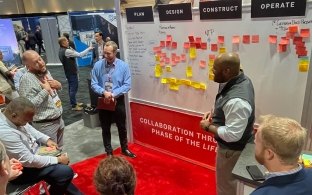
“A high-performing team is absolutely essential to a successful project,” says Sanders. “We guide project teams through structured onboarding exercises to build complete alignment and establish a clear project vision and charter.”
That focus on alignment is also why owners often develop long-term relationships with teams that deliver this way.
“By delivering services this way, the project team can truly deliver on a clients’ vision,” Garcia says. “The work done out of our Design Integration group is a differentiator. We show up as much more than just a contractor because we think differently.”
About the Author
Andy Shanahan is Senior Vice President of preconstruction services for McCarthy Building Companies. He oversees McCarthy’s preconstruction services group, which includes the design integration team, estimating team, virtual design and construction (VDC) services team as well as the mechanical/electrical/plumbing estimating (MEP) team.