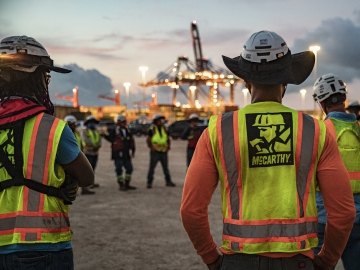
AAPI Heritage Month Partner Perspective: Gong Liu
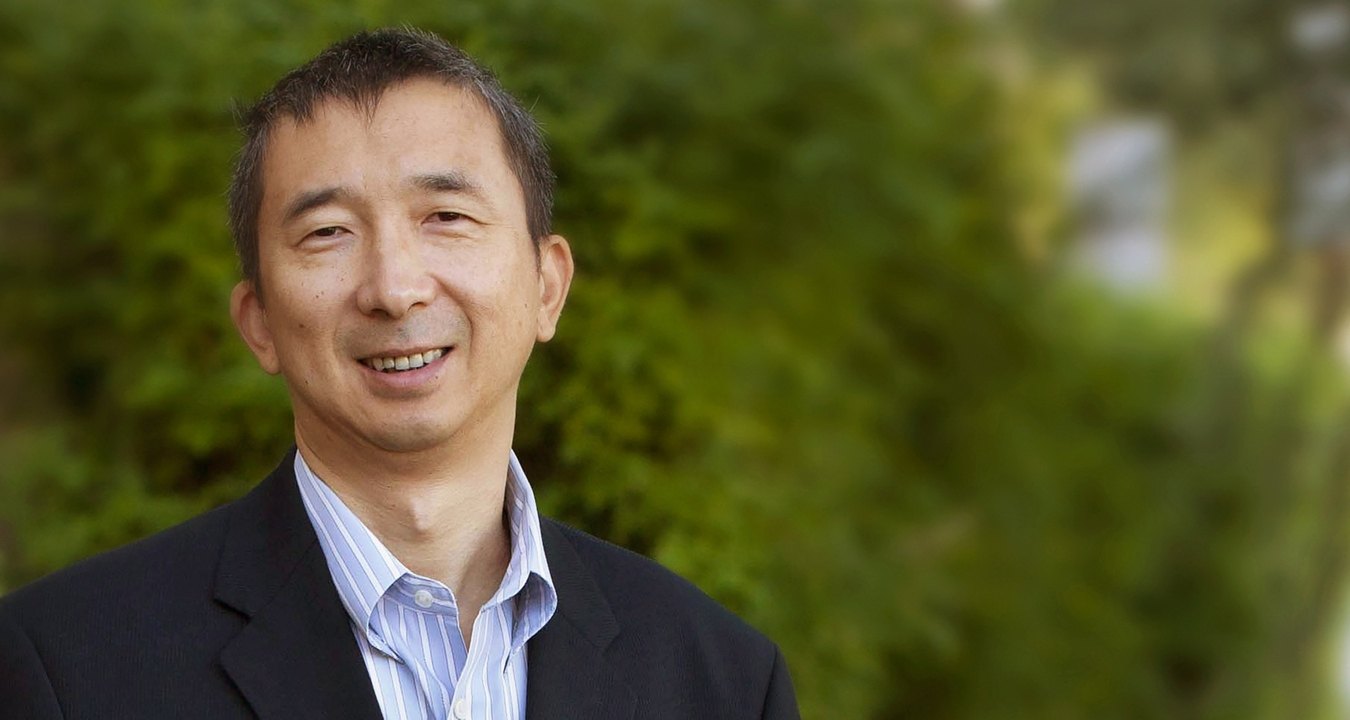
For Asian American and Pacific Islander (AAPI) Heritage Month, we are honored to share the story of Preconstruction Vice President Gong Liu. Gong has been with McCarthy for 32 years and talks about his serendipitous entry into construction, his extensive journey from operations to preconstruction and the legacy he leaves through his leadership and role in the Mission Critical market.
From Art Studio to Architecture Studio
At an early age, Gong thought he would pursue a career in art. He was trained in classical art such as sketching, watercolors and acrylic painting. He even applied to a very competitive high school that specialized in art. However, when he realized this was not the right path, a conversation with a neighbor who taught architecture at a local university gave him a new sense of direction.
“I was pretty good at math,” Gong said. “My neighbor told me I could be a great architect one day, so I looked into it and really fell in love with the idea.”
Gong attended a top-ranked high school and later entered an architectural program at the Beijing Institute of Architecture and Civil Engineering. After three years, he decided to move to the United States and transfer his credits to the University of Arizona.

“When I came to the United States, I was ready to start over as a freshman,” he said. “I didn’t speak English that well and the way they taught architecture was very different. However, I met with the associate dean and showed him my portfolio. He told me I was really good and I got placed in a fourth-year studio, allowing me to complete the five-year program on time.”
A Career-Changing Presentation
As graduation approached, Gong expected to either find a job with a design firm or enter a graduate program in architecture. Then, a chance hallway meeting with the dean of the College of Architecture changed everything.
“He asked if I knew what I was going to do next,” Gong said. “After learning I hadn’t decided yet, he strongly encouraged me to sit in on a presentation by Dr. Bill Badger, the head of the School of Construction’s graduate program at Arizona State. It turns out the dean (College of Architecture) had forgotten to announce and promote the presentation, so he was looking for anyone to help fill seats. I agreed to attend.”
What began as a favor to the dean quickly became a turning point. Gong found himself unexpectedly drawn to the program and the possibilities of a construction career.
“I was sold from that presentation,” he said. “It helped me realize I was more wired for construction than architecture. So, I applied and was admitted to the School of Construction and earned my master’s degree in just a year.”
Soon after, he applied to MBC and he has been here ever since.
The Change-Order Whisperer
Gong joined MBC in 1993 to help pursue a potential project with Motorola in China. That opportunity didn’t move forward, but Gong stayed in the U.S. He was sent to Motorola ULSI/MOS13, a large cleanroom facility project in Austin, Texas, and was assigned to manage change orders for the project.
“In the project engineering field, change orders can be a huge pain,” he said. “This was also the biggest project MBC was doing at the time. I was processing change orders every day for two years. However, those early years helped me to really understand the business at a deep level. I not only learned to process change orders well, but I also started seeing ways we could prevent them. It really built a foundation for the rest of my career.”
Gong also recalled not seeing many Asian or Chinese construction professionals in the industry back then.
“Even though I was different,” he said, “I felt very welcomed by everyone at MBC. People were curious about my cultural background, and I was curious about theirs. When I worked on the Grand Hotel project in Tusayan, Arizona, I worked with then-Superintendent Jim Lauer, now the Southwest Senior VP of Business Development. I remember cooking a stir-fry dish with potato slices and peppers for him and his family, which was a new experience for them.”
Gong went on to spend 18 years in operations, eventually becoming a project director in the Southwest Region. By then, he had a strong command of the operations side of the business. He was eager to bring that experience into preconstruction, where proactive planning can make execution easier, including reducing change orders.
In 2012, Gong shifted to a preconstruction director role, determined to influence projects earlier in the life cycle and help set teams up for success from day one.
Building a Career, Developing Future Leaders
In his 32 years at MBC, Gong has worked on many rewarding projects, some of which landed regional Melvin Awards and a national Roger Award.
When asked which project stands out most, he immediately recalled his work on Hayden Ferry Lakeside, a large mixed-use development in Tempe, Arizona featuring multiple high-rise offices, condominium towers and a large parking facility.
“That's a project I’m very proud of,” he said. “Many times I drove by there; I pointed it out to my kids and told them how their dad built all those buildings.”
Gong also credited former MBC leaders Bo Calbert and Dennis Tucker, whose mentorship shaped his early growth as both a builder and a leader. As Gong grew into his own leadership style, he had the opportunity to work with several current MBC leaders early in their careers, including Southwest Regional President Chris Nickle, Mission Critical COO Justin Dent, Southwest Senior VP Ops Brandon Moon, VP Ops Kurt Nyberg, and one particularly notable emerging leader.
“When I was the project manager at the Hayden Ferry Lakeside office tower,” he said, “along comes a young engineer who I knew had a bright future ahead of him. He was quick to build a great relationship with the client, he made great connections with everyone involved with the project, and he demonstrated tremendous leadership. It’s no surprise that he would lead the company one day.”
He then added with a smile, “Ray Sedey used to work for me.”
Embracing Family and Religion
Gong remembers having a modest childhood in Beijing. His father, Shaochang Liu, was a mechanical engineering professor at Tsinghua University, while his mother, Hengfang Jin, worked as a chief engineer at a textile factory. He was raised alongside his older brother, Li Liu.
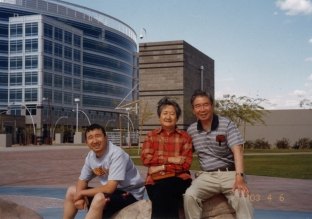
At the time, China had not yet experienced the economic growth that followed the market reforms of the early 1980s.
“Everything was limited before the reforms,” he said. “We didn’t have a car or phone. We had a black-and-white TV, while people in the United States already had color TVs. Still, I was pretty happy. I spent a lot of time outdoors—catching dragonflies and fish—and felt more connected to nature.”
Today, Gong’s life continues to revolve around family. He and his wife, Shimin, also a Chinese immigrant who came to the U.S. for school, have two children. Their 19-year-old son, Caleb, and 17-year-old daughter, Hannah, are a year apart in school. Caleb attends college and Hannah leaves for college this summer, ushering in a new “empty-nester” period for the parents.
Gong and his wife enjoy hiking, often taking advantage of the kids’ summer camps to sneak away for week-long trips to national parks. As a family, they share an annual tradition of skiing, a habit sparked years ago by MBC-organized ski trips.
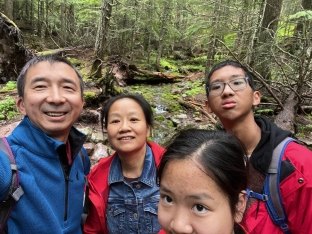
Gong also emphasized the importance of faith in his life, which he discovered after moving to the United States. In 2014, he took a six-month sabbatical to China to spend time with his parents. One of the things he values most from that period is helping them find a local faith community.
“Christian churches in China are not as widespread,” Gong said. “In some ways, they’re a bit hidden. When I was there, I helped my parents find a fellowship so they could have a community for Bible study and to share life with. It became an extended family for them, which was a true blessing.”
A Future in Mission Critical
Today, Gong is VP of Preconstruction for Mission Critical, leading a small but fast-growing team. He played an early and influential role in shaping the business unit, currently on track to grow from roughly $900 million in revenue to nearly $1.8 billion over the next few years.
“I feel like my entire career before stepping into Mission Critical was meant to prepare me for this moment,” he said. “I get to build something new, set the culture and expectations, apply everything I learned over the years and make sure we do things right the first time.”
For Gong, that’s the legacy that matters. Not just the buildings you can point to from the freeway, but the teams, systems and culture you build so that others can go on to accomplish incredible things.